
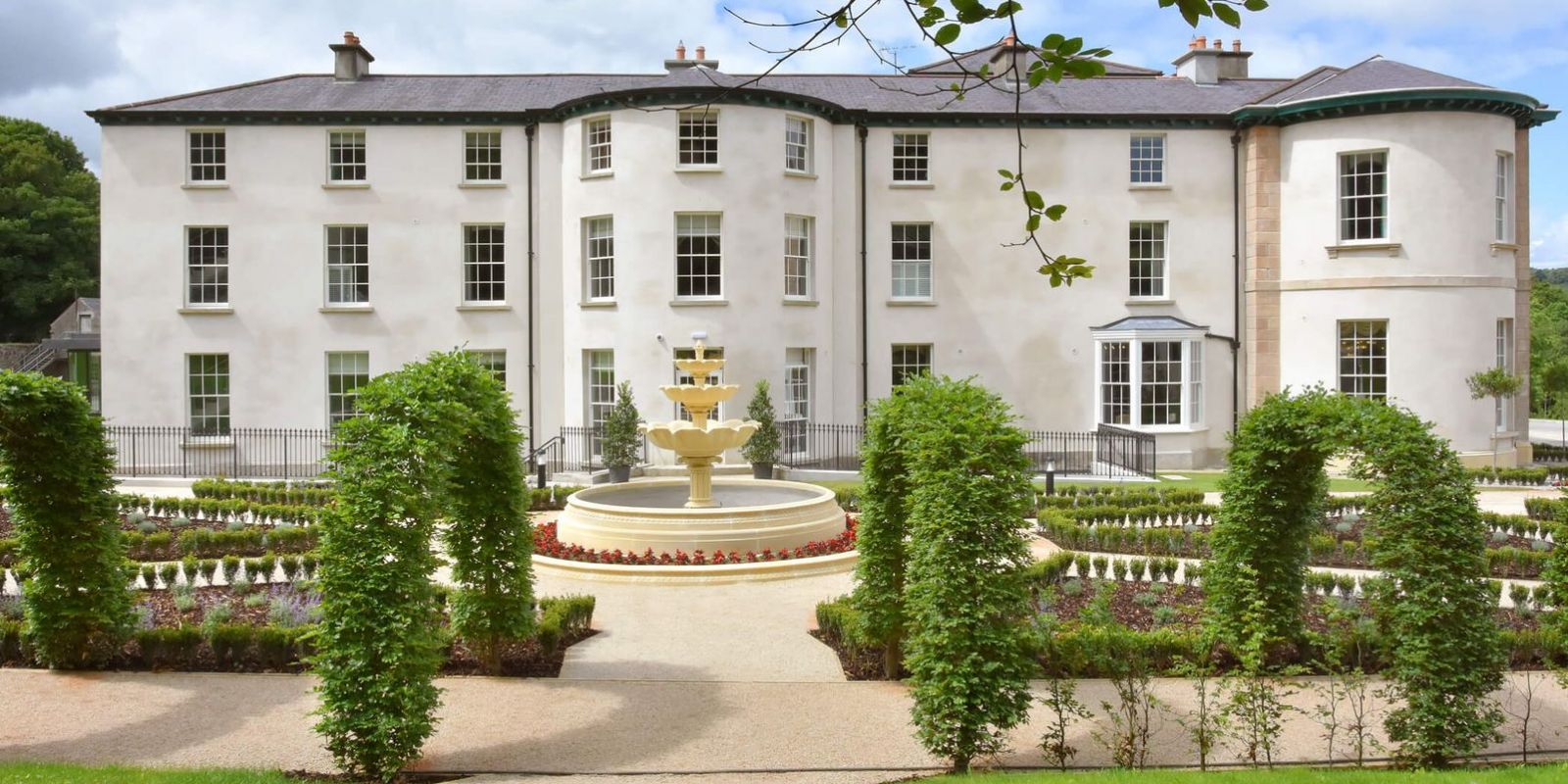
Unlocking the Health Benefits of a Luxury Wintery Escape to Donegal
Why "doing nothing" is the most productive thing you can do for your cognitive health.
There is a modern misconception about winter. We are often taught to view it as a season to be "gotten through" - a grey gap between the festivities of Christmas and the promise of Spring. We rush through the short days, fighting the dark, waiting impatiently for the light to return.
But at Rockhill, we view winter differently. We see it as permission.
As the writer Katherine May observes in her seminal work Wintering:
"Plants and animals don't fight the winter; they don't pretend it isn't happening and attempt to carry on living the same lives that they lived in the summer. They prepare. They adapt."
For the past few weeks, the House has been in hibernation. We closed our doors not to hide, but to align with this natural rhythm. We let the rooms breathe, we polished the brass and silver, we spent much needed time with loved ones and we tended to the grounds.
Now, as we reopen the doors and light the drawing room's fires, we invite you to do the same. Here is the science behind the art of hibernation.
The Science of "Social Jetlag"
We often feel guilty for resting, as if it were a sign of laziness. However, chronobiologists - scientists who study biological timing - suggest that fighting the winter darkness is detrimental to our health.
In winter, the reduced daylight naturally triggers earlier secretion of melatonin, the hormone that signals to the body that it is time to repair. However, modern life demands we maintain a "summer schedule" all year round. This misalignment between our biological clock (which wants to rest) and our social clock (which demands activity) is what Till Roenneberg, a professor of chronobiology at Ludwig-Maximilian University in Munich, terms "Social Jetlag."
Here in the hills overlooking Letterkenny, we provide more than just a hotel room, we share an environment to realign. Without the interference of city lights and demands, you can allow your circadian rhythm to synchronise with the natural light of the valley. It is not just "sleeping in"; it is a hormonal reset.
The Snow Moon and the Storm

Nature reveals new views across the Estate.
This alignment with nature is never more potent than in February.
Although for many the 1st of February (known as St Bridget's day or Imbolc) marks the first day of Spring, nature doesn't always follow the wishes of mankind.
In the old folklore and agricultural almanacs, the full moon of February is known as the Snow Moon, reflecting the depth of the winter blanket and the changeable weather as we approach meteorological Spring on the 1st of March. One guest told us they know it as the "drop moon" as it was the time the first snowdrops would flower in their family garden. However, it also carries a more turbulent name: the Storm Moon.
It is a name that resonates deeply in Donegal. This winter, the storms here were fierce. We sadly said goodbye to several more of the estate’s "ancient guardians" - grand mature trees, generations old, that finally succumbed to the high winds.
While we mourn them, their fall has revealed breathtaking new views which haven't been seen for a century - in some case, much longer. Psychologists Keltner and Haidt suggest that experiencing this kind of vastness - ancient trees, sweeping storms, or the brightness of a winter moon - triggers the emotion of Awe.
We encourage our guests to walk the 100 acres during this phase of the moon. Wrap up in wool (local tweed or a design by one of the many designersin the North West), brave the crisp Atlantic air, and witness the power of the landscape. It is a perspective shift that the modern mind desperately requires.
The Power of "Soft Fascination"
In the modern world, our brains are constantly engaged in what environmental psychologists call Directed Attention. This is the focus required to answer emails, drive in traffic, or scroll through a feed. This cognitive function is finite and easily exhausted.
In the 1980s, researchers Rachel and Stephen Kaplan developed Attention Restoration Theory (ART). They found that the only way to recharge this directed attention is to expose the brain to environments that provide "Soft Fascination."
Soft fascination occurs when your attention is held without effort. It is the act of watching flames dance in the grate of the Stewart drawing room's fireplace. It is taking moment as you walk to check-in to watch the mist roll across the Swilly Valley and Letterkenny until all you can faintly see is the Spire of St Eunan's Cathedral.
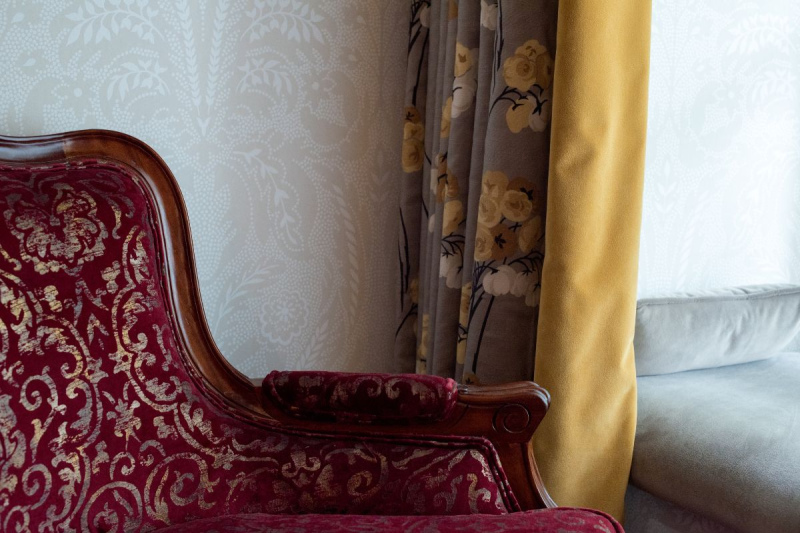
The House is architecturally designed for soft fascination. When you sit in a velvet armchair by the fire, you are not being lazy; you are engaging in a proven neurological restoration process.
The Ritual of the Bath
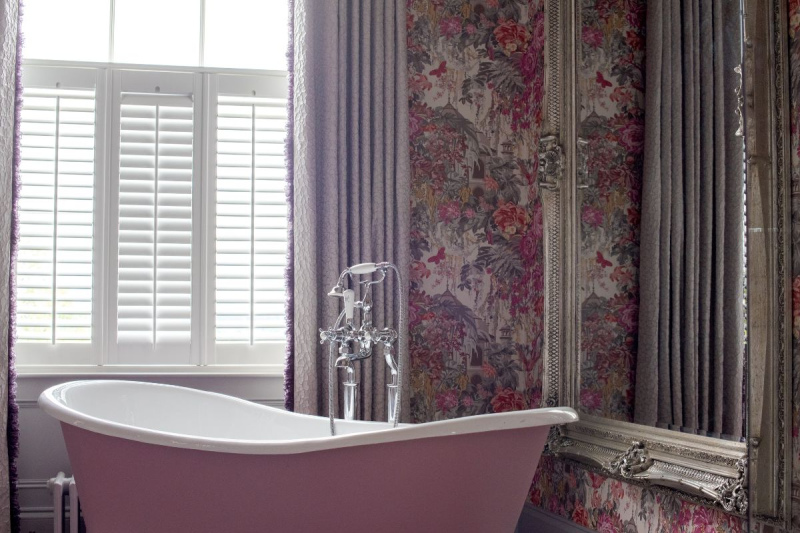
In our suites, the freestanding bathtub is not merely a fixture; it is a vessel for thermal regulation.
Research indicates that a hot bath 90 minutes before sleep can improve sleep quality by altering core body temperature. As you step out of the warm water in the Lady Norbury Suite and into the cooler air of the bedroom, your body temperature drops, mimicking the natural circadian drop that signals the brain to enter deep sleep.
This is not an indulgence. It is a physiological preparation for the kind of deep, restorative rest that is impossible to achieve in the noise of the city.
3 Ways to Practice the Pause
Whether you are staying with us or curating a sanctuary at home, here are three evidence-based practices to realign your rhythm this Snow Moon.
1. The Morning Anchor
To reduce "Social Jetlag," expose your eyes to natural daylight within 30 minutes of waking. At Rockhill, step out under our iconic porch with your morning coffee. This signals the body's master clock to cease melatonin production.
2. Seek "Fractal" Visuals
If you feel mental fatigue, seek out nature. The "Soft Fascination" mentioned by the Kaplans is triggered by fractals - the self-repeating patterns found in tree branches and coastlines. A twenty-minute walk in our ancient woodland is more restorative than an hour of television.
3. The Digital Twilight
We recommend a "Digital Twilight" beginning at 8:00 pm. Leave devices in your room and retreat to the Library bar. Let the amber light of the fire be the last thing you see before sleep; it is the natural cue for your body to drift into rest.
The Gift of Stewardship
We treat the Estate with stewardship - resting the land (and ourselves) so it can flourish. You must treat yourself with the same care.
A weekend of deep sleep, slow food in The Church, and the soft fascination of the House and The Wellhouse spa's wellness garden is not a luxury. It is a biological necessity.
The House is ready for you to stop.
Until next time,
Take good care.
Find Your Sanctuary
Experience the science of rest in the hills of Donegal.
Book Your Wellness Escape