
The Wild Atlantic Way
Donegal · Wild Atlantic Way
The Wild Atlantic Way
Starts Here
The Wild Atlantic Way is 2,500 kilometres of open road winding along the western seaboard of Ireland — one of the great coastal touring routes in the world. Donegal alone accounts for 500km of it. Rockhill House sits in the hills above Letterkenny at the northern end of the route, where all of the county’s principal roads converge.
This is not merely a convenient base. It is the right base — perfectly positioned for the two northernmost regions of the Way, with all three of Donegal’s WAW Signature Points within reach, and the route connecting to the Causeway Coastal Route at Muff in Donegal just minutes away.
WAW Regions from Rockhill
2
Northern Headlands & Surf Coast
WAW Signature Points
3
Malin Head, Fanad, Slieve League
Discovery Points
39
in Donegal alone
Malin Head
~75 min
Ireland’s most northerly point
Slieve League
~90 min
Europe’s highest sea cliffs
Donegal’s Stretch
500 km
of the 2,500km total route
WAW Region One — Heading North
The Northern Headlands
Inishowen, Malin Head & the Swilly shore
Heading north from Rockhill, the route swings along the shores of Lough Swilly — one of only three glacial fjords in Ireland — past Manorcunningham View, where the lough stretches wide below. From there, the Grianan of Aileach sits on the summit of Greenan Mountain: a stone ringfort with origins dating to 1700BC and a 360-degree view across three counties and two loughs.
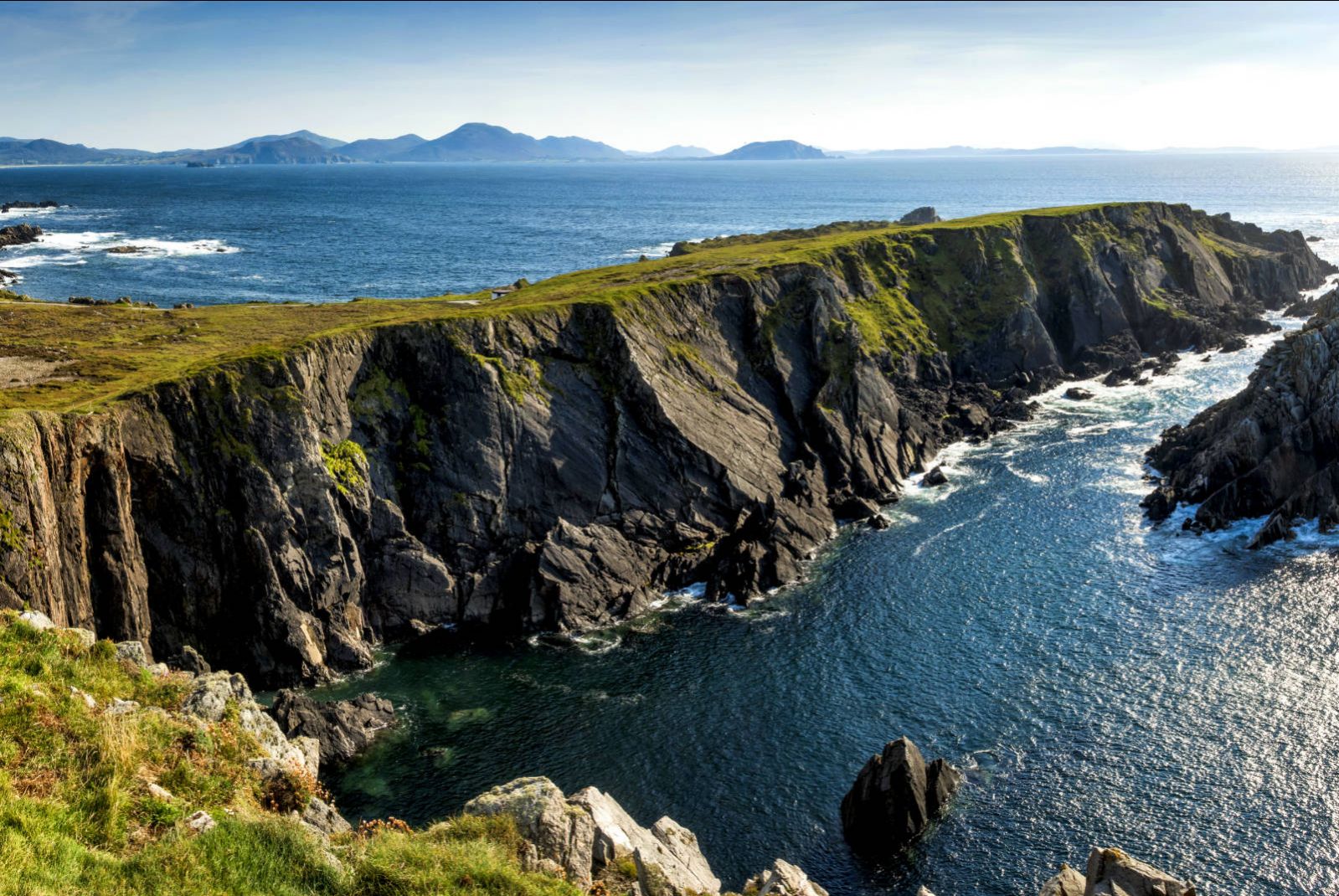
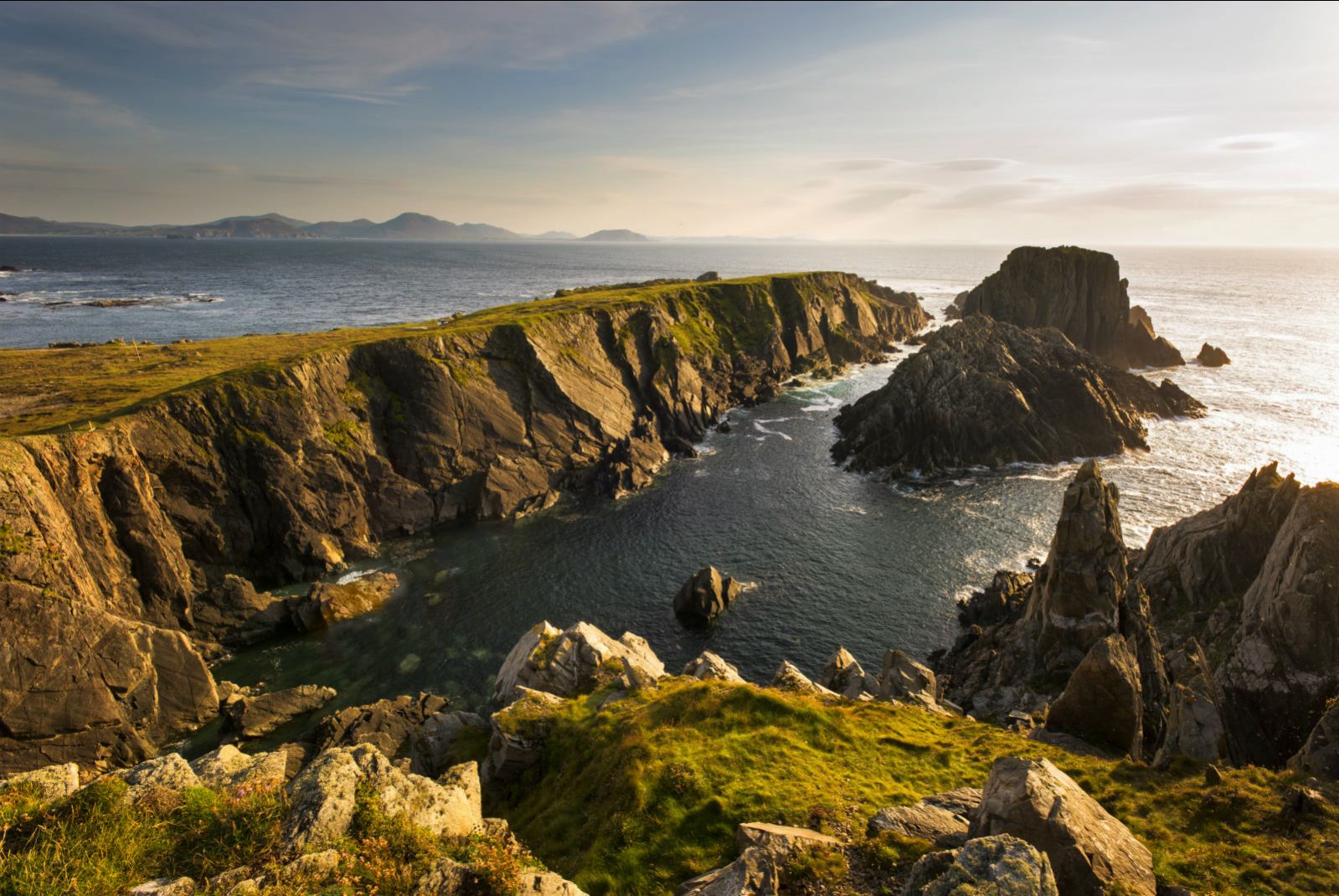
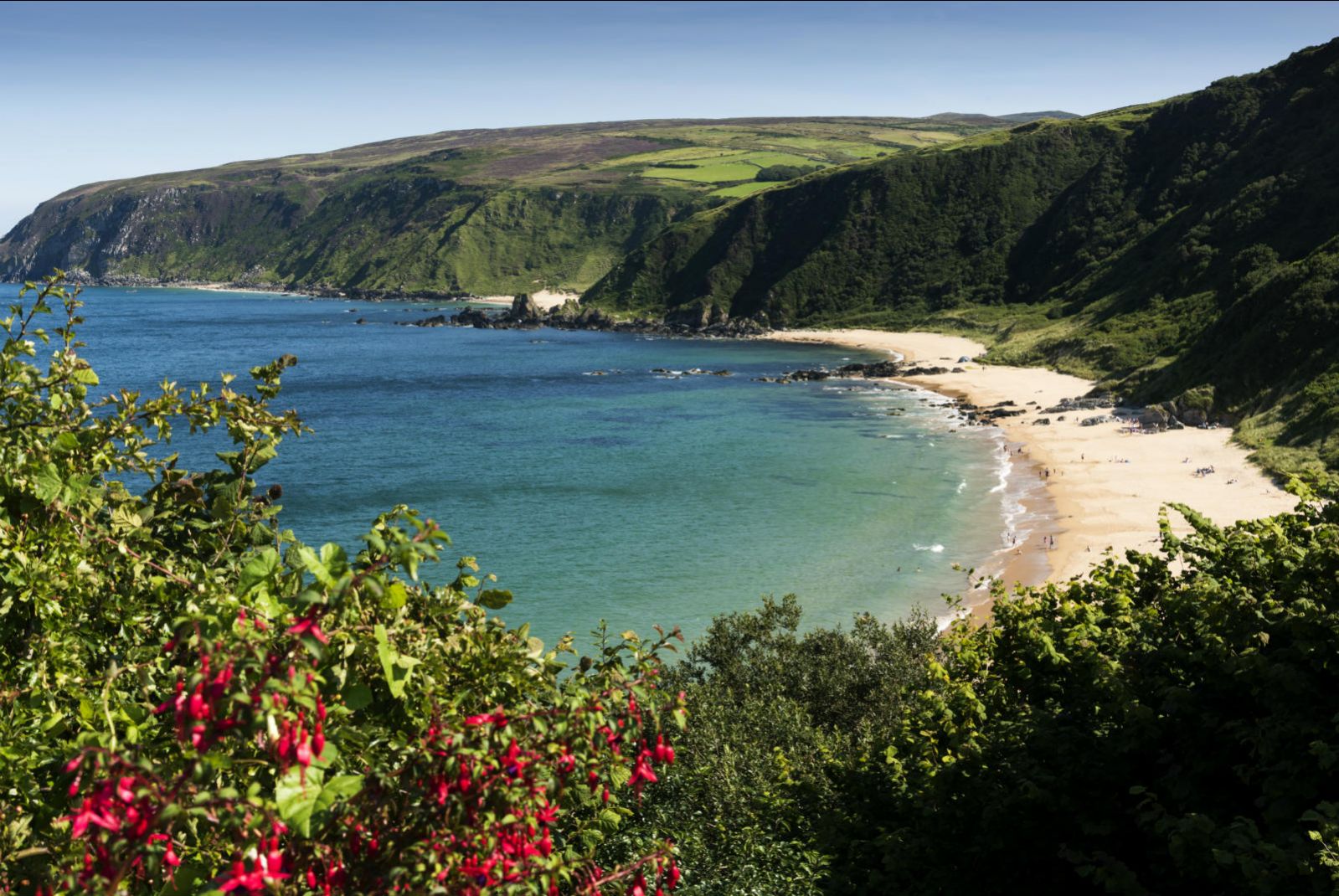
The Inishowen Peninsula opens from here — a succession of extraordinary beaches (Lisfannon, Pollan Bay, Culdaff, Kinnagoe Bay), the military museum at Fort Dunree, and the Famine Village at Doagh Island. The route culminates at Malin Head, Ireland’s most northerly point and the first Signature Point on the Wild Atlantic Way.
Stops Worth Making
Along the Northern Route
WAW Signature Point 1
Malin Head
Ireland’s most northerly point. One of the finest places in Ireland to see the Northern Lights. The drama of the headland justifies the journey on its own terms.
1700BC
Grianan of Aileach
A stone ringfort on the summit of Greenan Mountain, 20 minutes from Rockhill. Views across Donegal, Derry, and Tyrone. One of only five Irish sites on Ptolemy’s 2nd-century World Map.
Rockhill Connection
Fort Dunree
Military museum housing the Rockhill Collection — memorabilia on loan from soldiers who served at the estate. Napoleonic-era coastal fortification with spectacular cliff walks.
Ballyliffin
Nancy’s Barn
Widely considered to serve the finest chowder in Donegal. Worth timing the northern route around a lunch stop here.
Inch
Inch Wildfowl Reserve
An 8km loop walk around the lake with exceptional birdwatching. A quieter stop between Letterkenny and the Inishowen peninsula that rewards the detour.
WAW Region One — Heading South
Fanad, Rosguill & the Donegal Coast
Ramelton, Rathmullan, Fanad Head & beyond
Heading south from Rockhill, the route passes through Ramelton — a rose-lined riverside village — and Rathmullan on the western shore of Lough Swilly, before the Fanad and Rosguill peninsulas open out with some of the finest beaches in Ireland: Ballymastocker Strand, Portsalon, Downings, and Marble Hill.
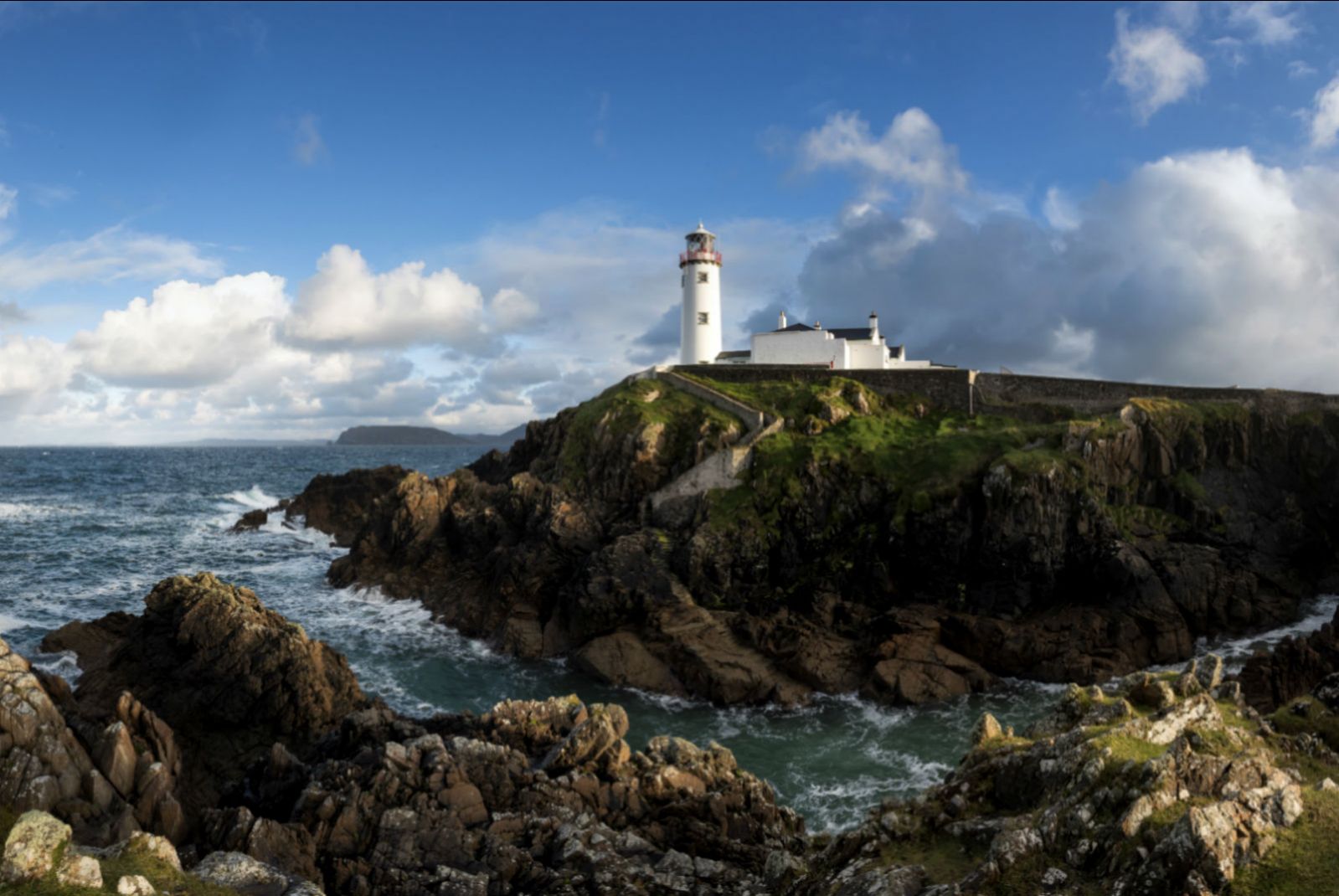
Fanad Head Lighthouse — established in 1817 and the second Signature Point on the Wild Atlantic Way — stands at the head of the peninsula with views across the open Atlantic. Ards Forest Park, a forest by the sea, lies further along the coast before the route swings through Dunfanaghy and into the Irish-speaking Gaeltacht areas of the north-west.
The coastline continues through Aranmore Island — reachable by ferry from Burtonport — Narin strand, Ardara, and Killybegs before arriving at Slieve League, the third and most dramatic Signature Point of all.
Stops Worth Making
Along the Southern Route
WAW Signature Point 2
Fanad Head Lighthouse
Established 1817. Perched on the head of the Fanad Peninsula, looking out over Lough Swilly and the open Atlantic. Tours available. Watch for dolphins in the cove below.
Sheephaven Bay
Doe Castle
A 16th-century castle surrounded by water on three sides, once stronghold of the MacSweeney clan and refuge to Spanish Armada sailors in 1588. Guided tours in summer.
Creeslough
Ards Forest Park
Ancient woodland rolling down to golden beaches. A boardwalk trail, marked walks, a children’s play area, and a café in a wooden cabin. A full day in one place.
Ferry from Burtonport
Aranmore Island
A short ferry crossing from Burtonport to one of Donegal’s inhabited Atlantic islands. Walking trails along the Arranmore Blueway, a working Gaeltacht community, and a coastline that feels genuinely remote. The island hosts its own walking festival each May.
Gaeltacht
Ardara & the Weaving Country
A picturesque village known for traditional weaving, knitwear, and craft. Good bars, good music, and a genuine sense of a place that has kept hold of its own culture.
WAW Signature Point 3
Slieve League Cliffs
Among the highest sea cliffs in Europe — three times the height of the Cliffs of Moher. One of the most dramatic landscapes in Ireland, and the culmination of the Donegal leg of the Wild Atlantic Way.
Plan Around Them
Donegal’s Festival Calendar
Donegal has a year-round programme of festivals and events that give any visit an extra dimension. Several are worth timing your stay around.
July · County-Wide
Earagail Arts Festival
A bilingual, multidisciplinary summer festival held throughout County Donegal along the Wild Atlantic Way each July. Inspiring performers, artists native to the area, and cultural exchange across the county. An Grianan Theatre in Letterkenny is one of the principal venues.
EAF.IE →Summer · Dungloe
Mary from Dungloe International Arts Festival
One of Ireland’s longest-running and most celebrated cultural festivals, held annually in the Gaeltacht town of Dungloe on the Wild Atlantic Way. A week-long event attracting over 45,000 visitors from across Ireland and the diaspora. Music, culture, and a genuine community celebration.
Spring · Ballyliffin & Clonmany
Inishowen Singing Weekend
The longest-running festival of traditional singing on the island of Ireland, now in its 36th year. A four-day celebration of local, national, and international traditional singing — sessions, concerts, workshops, and lectures in the villages of Ballyliffin and Clonmany on the Inishowen Peninsula.
May · Arranmore Island
Féile Siulóid Árainn Mhór
A walking festival on Arranmore Island, one of Donegal’s inhabited Atlantic islands. Walks along the Arranmore Blueway, music in the evenings, and a chance to experience island life on the Wild Atlantic Way. A genuinely distinctive way to spend a May weekend.
WAW Region Two
The Surf Coast
Beyond Slieve League, the Wild Atlantic Way becomes surf country. The Atlantic swells that arrive on this stretch of coastline have crossed thousands of miles of open ocean — and the beaches and reefs of Donegal and Sligo are among the finest in Europe for catching them.
Donegal · All Levels
Bundoran
The best-known surf town in Ireland — well set up for every level from first-timers to experienced surfers. To the north of town, Tullan Strand offers two kilometres of consistent dune-backed sandbar with peaks of all shapes and sizes. Closer to the centre, The Peak is arguably the most consistent and shapely A-frame reef break in the country. A full range of surf schools operates here, and the town has the après-surf energy to match.
For something quieter, nearby Rossnowlagh to the north offers a more remote alternative.
Sligo · World-Class Big Wave
Mullaghmore Head
One of the most formidable big-wave surf spots on the planet. Between October and March, Mullaghmore Head in County Sligo regularly produces waves of 50 to 60 feet — a dangerous, cold-water, left-hand reef break that draws elite big-wave surfers from around the world and is frequently compared to Teahupo’o and Mavericks for the sheer scale and power of its barrels. For those who come to watch rather than paddle out, it is one of the most extraordinary spectacles the Atlantic has to offer.
Big wave season: October – March.
Sligo · National Surf Centre
Strandhill
Strandhill is home to Ireland’s National Surf Centre — a fitting designation for a village that has built its identity around the Atlantic. The beach faces directly into the prevailing swell and produces reliable, powerful waves that make it one of the most respected surf spots on the island. The village itself is worth a visit regardless — good food, a strong local character, and the kind of atmosphere that forms around a community that takes its coastline seriously.
SURFING IRELAND →Before You Set Out
Practical Information
Ferry Services
Ferries connect the county to the island communities of Tory Island and Árainn Mhór (Aranmore) off the west coast. A seasonal ferry on Lough Foyle links Magilligan in Co. Derry to Greencastle in Co. Donegal. On Lough Swilly, a ferry runs between Buncrana and Rathmullan in summer.
FERRY TIMETABLES →Tide Times
Coastal walks, beach visits, and island crossings along the Wild Atlantic Way are all affected by the tide. Donegal’s tidal range is significant. Check current tide times before setting out, particularly for cliff walks and beach access at low-tide-only locations.
DONEGAL TIDE TIMES →Accessible Beaches
13 beaches in Donegal are currently wheelchair accessible, with six of those providing beach wheelchair hire. Donegal County Council maintains a current list of accessible beaches and facilities.
ACCESSIBLE BEACHES →Interactive WAW Map
Donegal County Council maintains a detailed interactive map of all 39 Wild Atlantic Way Discovery Points in the county, with locations, route details, and planning tools.
OPEN THE MAP →Complimentary for All Guests
The Rockhill House Digital Guide
All guests at Rockhill House receive complimentary access to our digital guide — including Wild Atlantic Way itinerary suggestions, recommended stops, places to eat along the route, and insider tips from our team.
ACCESS THE GUIDE →Your Wild Atlantic Way Base
Book Your Stay at Rockhill House
Our team are always happy to help you plan your Wild Atlantic Way itinerary — whether that is a single day trip or a full week along the route. Just ask.
